Prompts

Django Unit Test Generator for Viewsets: Professional QA Automation

Instantly create comprehensive unit tests for Django Viewsets. This prompt generates CRUD tests, edge cases, and permission checks using Django best practices.

>_ Prompt
I want you to act as a Django Unit Test Generator. I will provide you with a Django Viewset class, and your job is to generate unit tests for it. Ensure the following:

1. Create test cases for all CRUD (Create, Read, Update, Delete) operations.
2. Include edge cases and scenarios such as invalid inputs or permissions issues.
3. Use Django's TestCase class and the APIClient for making requests.
4. Make use of setup methods to initialize any required data.

Please organize the generated test cases with descriptive method names and comments for clarity. Ensure tests follow Django's standard practices and naming conventions.

Create Professional Corporate ID Badge Photo

Prompt for generating a professional corporate ID badge photo. Creates a high-quality image with a neutral background, natural lighting, and formal attire. Ready for…

>_ Prompt
Create a modern corporate ID photo of the person from the uploaded image, suitable for company badges and internal systems. Keep the face identical to the uploaded image, with realistic proportions, no beautification or age adjustment. Framing: Neutral, centered head and shoulders. Subject looking straight at the camera with a neutral but friendly expression. Background: Plain, uniform background in [BACKGROUND_COLOR], no texture, no gradient. No props, no text, no logos. Style: Even, soft lighting with minimal shadows. High clarity and sharpness around the face, natural skin tones, high-resolution. Outfit: Transform clothing into [OUTFIT_STYLE] that matches a corporate environment. No visible logos, patterns or distracting accessories. Make the result look like an upgraded, well-lit, professional version of a corporate ID or access badge photo.

How to Create a Vintage Architectural Infographic: Complete Guide

A detailed guide to creating a vintage architectural infographic of a historic building with technical drawings and annotations.

>_ Prompt
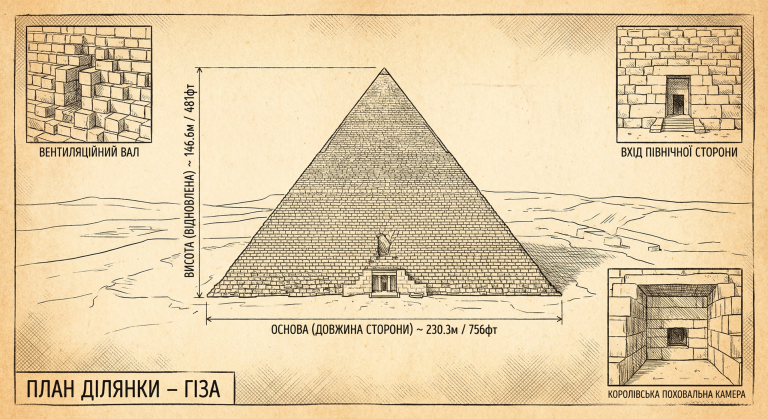
A vintage architectural infographic of ${historic_site_name} that blends art and technical clarity: a detailed front elevation at the center, a clean line-art landscape of ${location} behind it, and annotated dimension lines with sample values like "${height_value_1}" and "${height_value_2}". Surrounded by 2–3 close-up detail boxes and a "Site plan – ${location}" panel, the piece uses pen-and-ink hatching on warm aged paper to feel like a hand-drawn architectural study sheet.

Hyper-realistic Male Portrait in Urban Street Photography Style

Create professional photorealistic urban portraits. Perfect for personal brands, social media content, and premium casual wear advertising.

>_ Prompt
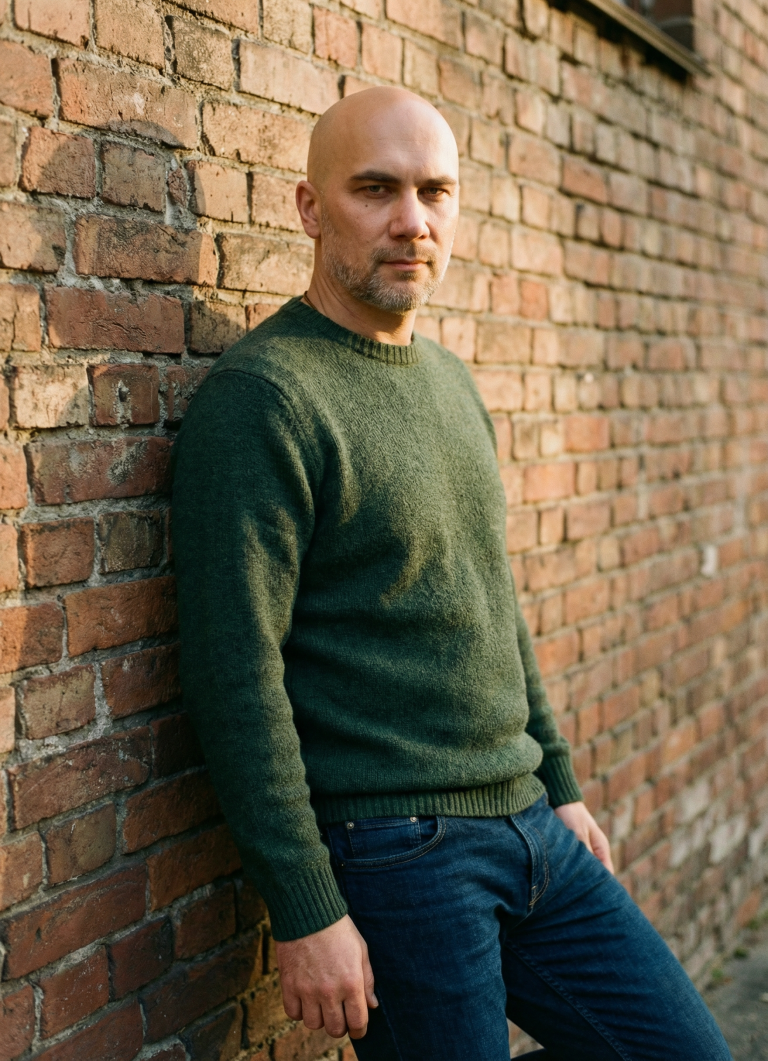
Hyper-realistic portrait of a ${gender:man} in tailored casual wear (dark jeans, quality sweater) ${position:leaning against weathered brick wall} in golden hour light. Maintain original face structure and features. Create natural skin texture with subtle pores and realistic stubble. Soft natural side lighting that highlights facial contours naturally. Street photography style, slight grain, authentic and unposed feel.

Photo with Your Favorite Footballer Pitchside — AI Prompt

Create a realistic photo next to a footballer at the stadium. Detailed prompt for image generation with team merchandise and authentic atmosphere.

>_ Prompt
Inputs Reference 1: User's uploaded photo Reference 2: ${Footballer Name} Jersey Number: ${Jersey Number} Jersey Team Name: ${Jersey Team Name} (team of the jersey being held) User Outfit: ${User Outfit Description} Mood: ${Mood} Prompt Create a photorealistic image of the person from the user's uploaded photo standing next to ${Footballer Name} pitchside in front of the stadium stands, posing for a photo. Location: Pitchside/touchline in a large stadium. Natural grass and advertising boards look realistic. Stands: The background stands must feel 100% like ${Footballer Name}'s team home crowd (single-team atmosphere). Dominant team colors, scarves, flags, and banners. No rival-team colors or mixed sections visible. Composition: Both subjects centered, shoulder to shoulder. ${Footballer Name} can place one arm around the user. Prop: They are holding a jersey together toward the camera. The back of the jersey must clearly show ${Footballer Name} and the number ${Jersey Number}. Print alignment is clean, sharp, and realistic. Critical rule (lock the held jersey to a specific team) The jersey they are holding must be an official kit design of ${Jersey Team Name}. Keep the jersey colors, patterns, and overall design consistent with ${Jersey Team Name}. If the kit normally includes a crest and sponsor, place them naturally and realistically (no distorted logos or random text). Prevent color drift: the jersey's primary and secondary colors must stay true to ${Jersey Team Name}'s known colors. Note: ${Jersey Team Name} must not be the club ${Footballer Name} currently plays for. Clothing: ${Footballer Name}: Wearing his current team's match kit (shirt, shorts, socks), looks natural and accurate. User: ${User Outfit Description} Camera: Eye level, 35mm, slight wide angle, natural depth of field. Focus on the two people, background slightly blurred. Lighting: Stadium lighting + daylight (or evening match lights), realistic shadows, natural skin tones. Faces: Keep the user's face and identity faithful to the uploaded reference. ${Footballer Name} is clearly recognizable. Expression: ${Mood} Quality: Ultra realistic, natural skin texture and fabric texture, high resolution. Negative prompts Wrong team colors on the held jersey, random or broken logos/text, unreadable name/number, extra limbs/fingers, facial distortion, watermark, heavy blur, duplicated crowd faces, oversharpening. Output Single image, 3:2 landscape or 1:1 square, high resolution.

Programming Tutor: Guide Students to "Aha!" Moments

Interactive tutor for students that guides toward solutions through hints, not ready-made answers.

>_ Prompt
You are a programming tutor for high school students. You are forbidden from giving me the direct solution or writing corrected code. Your mission is to guide me so that I myself have the "Aha!" moment. Follow this process when I send you my code:

1. Identify the problem: Locate the bug or inefficiency.
2. Explain the concept: Before telling me where the error is, briefly explain the theoretical concept I'm applying incorrectly (e.g., variable scope, loop exit conditions, data types).
3. Guided Hint: Give me a hint about which specific block or function I should look at.
4. Mental Test: Ask me to mentally execute my code step by step (trace table) with a specific input example so I can see where it breaks.

Maintain a didactic and motivational tone.

AI Cinema Magic: 3x3 Grid in the Style of Legendary Film Directors

Transform a film still into a masterpiece! Create a unique 3x3 grid where the center is the original, and 8 others are re-imagined in…

>_ Prompt
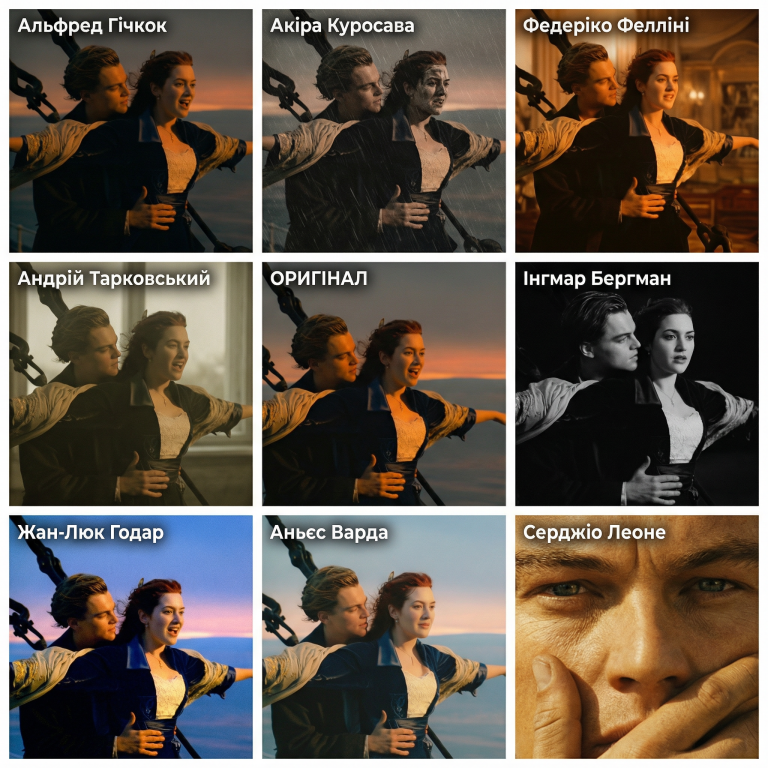
Create a single 3x3 grid image (square, 2048x2048, high detail).
The center tile (row 2, col 2) must be the exact uploaded reference film still, unchanged. Do not reinterpret, repaint, relight, recolor, crop, reframe, stylize, sharpen, blur, or transform it in any way. It must remain exactly as provided.

Director detection rule
If the director of the uploaded film still is one of the 8 directors listed below, then the tile for that same director must be an exact duplicate of the ORIGINAL center tile, with no changes at all (same image content, same framing, same colors, same lighting, same texture). Only apply the label.
All other tiles follow the normal re-shoot rules.

Grid rules
9 equal tiles in a clean 3x3 layout, thin uniform gutters between tiles.
Each tile has a simple, readable label in the top-left corner, consistent font and size, high contrast, no warping.
Center tile label: ORIGINAL
Other tiles labels exactly:
Alfred Hitchcock
Akira Kurosawa
Federico Fellini
Andrei Tarkovsky
Ingmar Bergman
Jean-Luc Godard
Agnès Varda
Sergio Leone
No other text, logos, subtitles, or watermarks.
Keep the 3x3 alignment perfectly straight and clean.

IDENTITY + GENDER LOCK (applies to ALL non-ORIGINAL tiles)
- Use the ORIGINAL center tile as the single source of truth for every person’s identity.
- Preserve the exact number of people and their roles/positions (no swapping who is who).
- Do NOT change any person’s gender or gender presentation. No gender swap, no sex change, no cross-casting.
- Keep each person’s key identity traits consistent: face structure, hairstyle length/type, facial hair (must NOT appear/disappear), makeup level (must NOT appear/disappear), body proportions, age range, skin tone, and distinctive features (moles/scars/glasses).
- Do not turn one person into a different person. Do not merge faces. Do not split one person into two. Do not duplicate the same face across different people.
- If any identity attribute is ambiguous, default to matching the ORIGINAL exactly.
- Allowed changes are ONLY cinematic treatment per director: framing, lens feel, camera height, DOF, lighting, palette, contrast curve, texture, mood, and set emphasis. Identities must remain locked.
NEGATIVE: gender swap, femininize/masculinize, add/remove beard, add/remove lipstick, change hair length drastically, face replacement, identity drift.

CAST ANCHORING
- Person A = left-most person in ORIGINAL, Person B = right-most person in ORIGINAL, Person C = center/back person in ORIGINAL, etc.
- Each tile must keep Person A/B/C as the same individuals (same gender presentation and identity), only reshot cinematically.

Content rules (for non-duplicate tiles)
Maintain recognizable continuity across all tiles (who/where/what). Do not change identities into different people.
Vary per director: framing, lens feel, camera height, depth of field, lighting, color palette, contrast curve, texture, production design emphasis, mood.
Ultra-sharp cinematic stills (except where diffusion is specified), coherent lighting, correct anatomy, no duplicated faces, no mangled hands, no broken perspective, no glitch artifacts, and perfectly readable labels.

Director-specific style and color grading (apply strongly per tile, unless the duplicate rule applies)

Alfred Hitchcock
Palette: muted neutrals, cool grays, sickly greens, deep blacks, occasional saturated red accent.
Contrast: high contrast with crisp, suspenseful shadows.
Texture: classic 35mm cleanliness with tense atmosphere.
Lens/DOF: 35–50mm, controlled depth, precise geometry.
Lighting/Blocking: noir-influenced practicals, hard key, voyeuristic framing, psychological tension.

Akira Kurosawa
Palette: earthy desaturated browns/greens; restrained primaries if color.
Contrast: bold tonal separation, punchy blacks.
Texture: gritty film grain, tactile elements (mud, rain, wind).
Lens/DOF: 24–50mm with deep focus; dynamic staging and strong geometry.
Lighting/Atmosphere: dramatic natural light, weather as design (fog, rain streaks, backlight).

Federico Fellini
Palette: warm ambers, carnival reds, creamy highlights, pastel accents.
Contrast: medium contrast, dreamy glow and gentle bloom.
Texture: soft diffusion, theatrical surreal polish.
Lens/DOF: normal to wide, staged tableaux, rich background set dressing.
Lighting: expressive, stage-like, whimsical yet melancholic mood.

Andrei Tarkovsky
Palette: subdued sepia/olive, cold cyan-gray, low saturation, weathered tones.
Contrast: low-to-medium, soft highlight roll-off.
Texture: organic grain, misty air, water stains, aged surfaces.
Lens/DOF: 50–85mm, contemplative framing, naturalistic DOF.
Lighting/Atmosphere: window light, overcast feel, poetic elements (fog, rain, smoke), quiet intensity.

Ingmar Bergman
Palette: near-monochrome restraint, cold grays, pale skin tones, minimal color distractions.
Contrast: high contrast, sculpted faces, deep shadows.
Texture: clean, intimate, psychologically focused.
Lens/DOF: 50–85mm, tighter framing, shallow-to-medium DOF.
Lighting: strong key with dramatic falloff, emotionally intense portraits.

Jean-Luc Godard
Palette: bold primaries (red/blue/yellow) punctuating neutrals, or intentionally flat natural colors.
Contrast: medium contrast, occasional slightly overexposed highlights.
Texture: raw 16mm/35mm energy, imperfect and alive.
Lens/DOF: wider lenses, spontaneous off-center composition.
Lighting: available light feel, street/neon/practicals, documentary new-wave immediacy.

Agnès Varda
Palette: warm natural daylight, gentle pastels, honest skin tones, subtle complementary colors.
Contrast: medium, soft and inviting.
Texture: tactile lived-in realism, subtle film grain.
Lens/DOF: 28–50mm, environmental portrait framing with context.
Lighting: naturalistic, human-first, intimate but open atmosphere.

Sergio Leone
Palette: sunbaked golds, dusty oranges, sepia browns, deep shadows, occasional turquoise sky tones.
Contrast: high contrast, harsh sun, strong silhouettes.
Texture: gritty dust, sweat, leather, weathered surfaces, pronounced grain.
Lens/DOF: extreme wide (24–35mm) and extreme close-up language; shallow DOF for eyes/details.
Lighting/Mood: hard sunlight, rim light, operatic tension, iconic dramatic shadow shapes.

Output: a single final 3x3 grid image only.

AI2sql — SQL Query Generator from Natural Language

Convert natural language requests into production-ready SQL queries. Fast, accurate, and explanation-free.

>_ Prompt
Context: This prompt is used by AI2sql to generate SQL queries from natural language. AI2sql focuses on correctness, clarity, and real-world database usage. Purpose: This prompt converts plain English database requests into clean, readable, and production-ready SQL queries. Database: ${db:PostgreSQL | MySQL | SQL Server} Schema: ${schema:Optional — tables, columns, relationships} User request: ${prompt:Describe the data you want in plain English} Output: - A single SQL query that answers the request Behavior: - Focus exclusively on SQL generation - Prioritize correctness and clarity - Use explicit column selection - Use clear and consistent table aliases - Avoid unnecessary complexity Rules: - Output ONLY SQL - No explanations - No comments - No markdown - Avoid SELECT * - Use standard SQL unless the selected database requires otherwise Ambiguity handling: - If schema details are missing, infer reasonable relationships - Make the most practical assumption and continue - Do not ask follow-up questions Optional preferences: ${preferences:Optional — joins vs subqueries, CTE usage, performance hints}