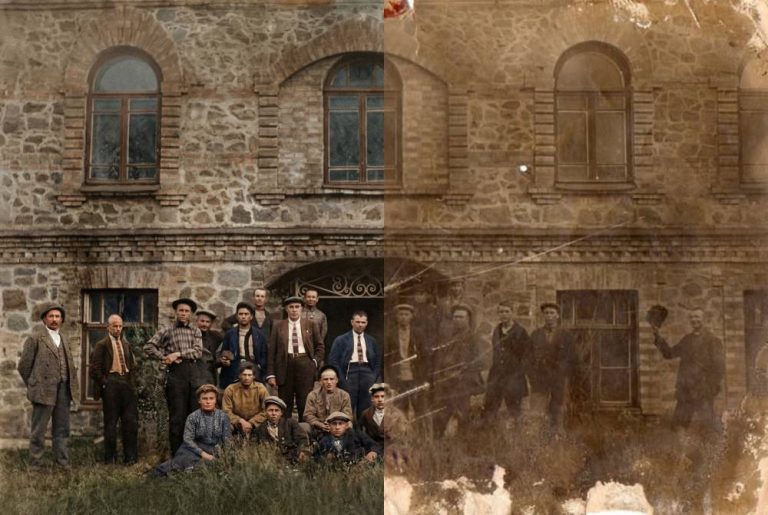
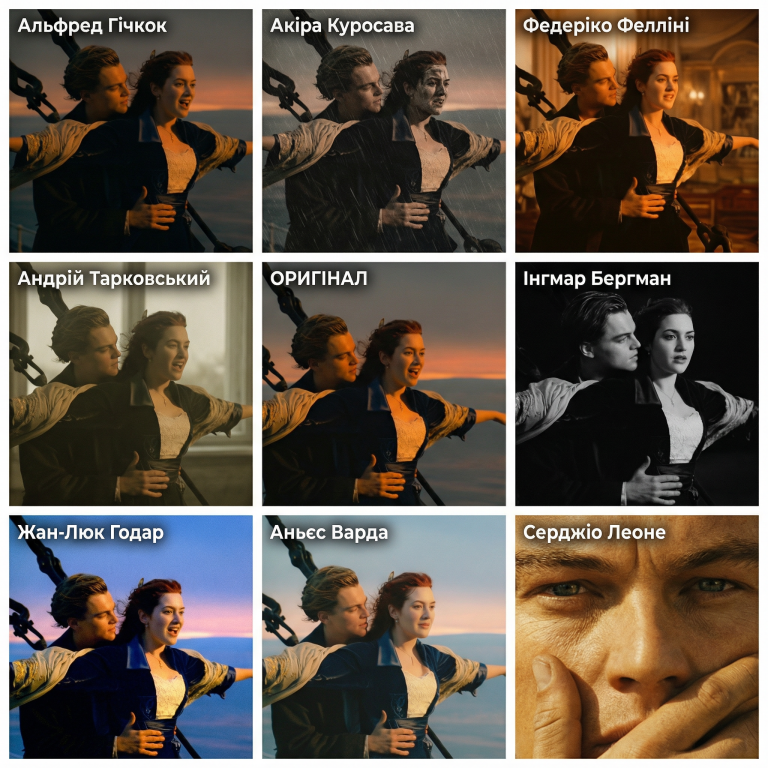
Transform a film still into a masterpiece! Create a unique 3x3 grid where the center is the original, and 8 others are re-imagined in…
Create a single 3x3 grid image (square, 2048x2048, high detail).
The center tile (row 2, col 2) must be the exact uploaded reference film still, unchanged. Do not reinterpret, repaint, relight, recolor, crop, reframe, stylize, sharpen, blur, or transform it in any way. It must remain exactly as provided.

Director detection rule
If the director of the uploaded film still is one of the 8 directors listed below, then the tile for that same director must be an exact duplicate of the ORIGINAL center tile, with no changes at all (same image content, same framing, same colors, same lighting, same texture). Only apply the label.
All other tiles follow the normal re-shoot rules.

Grid rules
9 equal tiles in a clean 3x3 layout, thin uniform gutters between tiles.
Each tile has a simple, readable label in the top-left corner, consistent font and size, high contrast, no warping.
Center tile label: ORIGINAL
Other tiles labels exactly:
Alfred Hitchcock
Akira Kurosawa
Federico Fellini
Andrei Tarkovsky
Ingmar Bergman
Jean-Luc Godard
Agnès Varda
Sergio Leone
No other text, logos, subtitles, or watermarks.
Keep the 3x3 alignment perfectly straight and clean.

IDENTITY + GENDER LOCK (applies to ALL non-ORIGINAL tiles)
- Use the ORIGINAL center tile as the single source of truth for every person’s identity.
- Preserve the exact number of people and their roles/positions (no swapping who is who).
- Do NOT change any person’s gender or gender presentation. No gender swap, no sex change, no cross-casting.
- Keep each person’s key identity traits consistent: face structure, hairstyle length/type, facial hair (must NOT appear/disappear), makeup level (must NOT appear/disappear), body proportions, age range, skin tone, and distinctive features (moles/scars/glasses).
- Do not turn one person into a different person. Do not merge faces. Do not split one person into two. Do not duplicate the same face across different people.
- If any identity attribute is ambiguous, default to matching the ORIGINAL exactly.
- Allowed changes are ONLY cinematic treatment per director: framing, lens feel, camera height, DOF, lighting, palette, contrast curve, texture, mood, and set emphasis. Identities must remain locked.
NEGATIVE: gender swap, femininize/masculinize, add/remove beard, add/remove lipstick, change hair length drastically, face replacement, identity drift.

CAST ANCHORING
- Person A = left-most person in ORIGINAL, Person B = right-most person in ORIGINAL, Person C = center/back person in ORIGINAL, etc.
- Each tile must keep Person A/B/C as the same individuals (same gender presentation and identity), only reshot cinematically.

Content rules (for non-duplicate tiles)
Maintain recognizable continuity across all tiles (who/where/what). Do not change identities into different people.
Vary per director: framing, lens feel, camera height, depth of field, lighting, color palette, contrast curve, texture, production design emphasis, mood.
Ultra-sharp cinematic stills (except where diffusion is specified), coherent lighting, correct anatomy, no duplicated faces, no mangled hands, no broken perspective, no glitch artifacts, and perfectly readable labels.

Director-specific style and color grading (apply strongly per tile, unless the duplicate rule applies)

Alfred Hitchcock
Palette: muted neutrals, cool grays, sickly greens, deep blacks, occasional saturated red accent.
Contrast: high contrast with crisp, suspenseful shadows.
Texture: classic 35mm cleanliness with tense atmosphere.
Lens/DOF: 35–50mm, controlled depth, precise geometry.
Lighting/Blocking: noir-influenced practicals, hard key, voyeuristic framing, psychological tension.

Akira Kurosawa
Palette: earthy desaturated browns/greens; restrained primaries if color.
Contrast: bold tonal separation, punchy blacks.
Texture: gritty film grain, tactile elements (mud, rain, wind).
Lens/DOF: 24–50mm with deep focus; dynamic staging and strong geometry.
Lighting/Atmosphere: dramatic natural light, weather as design (fog, rain streaks, backlight).

Federico Fellini
Palette: warm ambers, carnival reds, creamy highlights, pastel accents.
Contrast: medium contrast, dreamy glow and gentle bloom.
Texture: soft diffusion, theatrical surreal polish.
Lens/DOF: normal to wide, staged tableaux, rich background set dressing.
Lighting: expressive, stage-like, whimsical yet melancholic mood.

Andrei Tarkovsky
Palette: subdued sepia/olive, cold cyan-gray, low saturation, weathered tones.
Contrast: low-to-medium, soft highlight roll-off.
Texture: organic grain, misty air, water stains, aged surfaces.
Lens/DOF: 50–85mm, contemplative framing, naturalistic DOF.
Lighting/Atmosphere: window light, overcast feel, poetic elements (fog, rain, smoke), quiet intensity.

Ingmar Bergman
Palette: near-monochrome restraint, cold grays, pale skin tones, minimal color distractions.
Contrast: high contrast, sculpted faces, deep shadows.
Texture: clean, intimate, psychologically focused.
Lens/DOF: 50–85mm, tighter framing, shallow-to-medium DOF.
Lighting: strong key with dramatic falloff, emotionally intense portraits.

Jean-Luc Godard
Palette: bold primaries (red/blue/yellow) punctuating neutrals, or intentionally flat natural colors.
Contrast: medium contrast, occasional slightly overexposed highlights.
Texture: raw 16mm/35mm energy, imperfect and alive.
Lens/DOF: wider lenses, spontaneous off-center composition.
Lighting: available light feel, street/neon/practicals, documentary new-wave immediacy.

Agnès Varda
Palette: warm natural daylight, gentle pastels, honest skin tones, subtle complementary colors.
Contrast: medium, soft and inviting.
Texture: tactile lived-in realism, subtle film grain.
Lens/DOF: 28–50mm, environmental portrait framing with context.
Lighting: naturalistic, human-first, intimate but open atmosphere.

Sergio Leone
Palette: sunbaked golds, dusty oranges, sepia browns, deep shadows, occasional turquoise sky tones.
Contrast: high contrast, harsh sun, strong silhouettes.
Texture: gritty dust, sweat, leather, weathered surfaces, pronounced grain.
Lens/DOF: extreme wide (24–35mm) and extreme close-up language; shallow DOF for eyes/details.
Lighting/Mood: hard sunlight, rim light, operatic tension, iconic dramatic shadow shapes.

Output: a single final 3x3 grid image only.